| Name of Venue | |
| Kolaj Institute Gallery | |
| Featured Artist or Artists: | |
| 28 artists from Belgium, Canada, Germany, and across the USA | |
| Venue Website: | |
| https://www.kolajinstitute.org | |
| Exhibition Link | |
| https://kolajinstitute.org/kolaj-institute-gallery-new-orleans/ | |
| Venue address: | |
| 2374 Saint Claude Avenue Suite 230 New Orleans, Louisiana 70117 United States Map It |
|
| Venue Phone Number: | |
| (802) 264-4839 | |
| Venue Operating Hours: | |
| Thurs-Sat, Noon-6PM | |
| Exhibition Start Date | |
| 12/10/2025 | |
| Exhibition End Date | |
| 01/24/2026 | |
| Will you host a public opening? | |
|
|
| Opening Event Date & Time | |
| Saturday, December 13, 5-8PM | |
| Additional Programming: | |
| Curator Tour of the Exhibition, Sunday, December 14th, 11AM-12:30PM |
—————————————————-
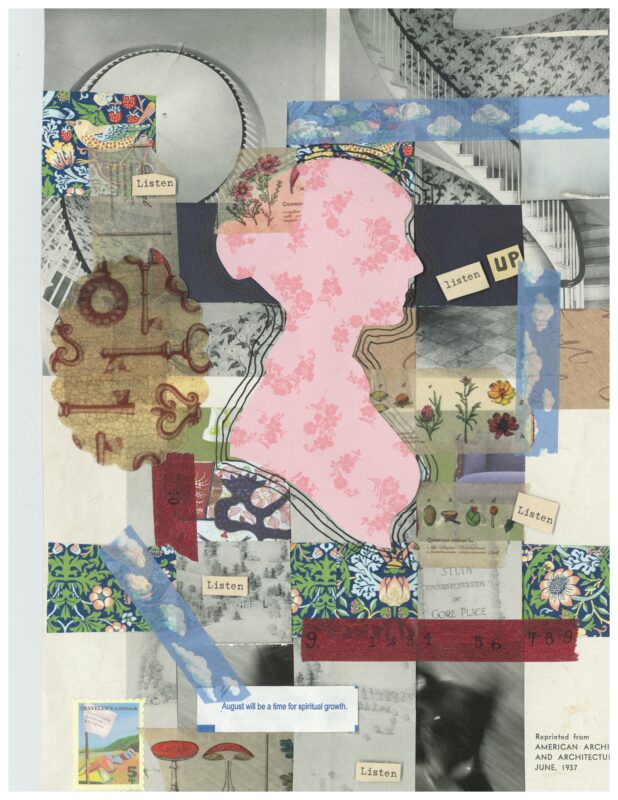
Throughout 2024 and 2025, Kolaj Institute hosted virtual residencies during which artists made work at the intersection of photography and collage. Each June, New Orleans Photo Alliance Gallery hosted exhibitions as part of Kolaj Fest New Orleans and, in December 2024, Kolaj Institute presented “Camera & Collage” at its gallery in New Orleans. These activities along with that of a number of solo artists in residence and articles in the magazine have given us many points of reference to view and think about the intersection. In December 2025, Kolaj Institute will present the exhibition, “Pictures at the Intersection of Photography & Collage” at its gallery in New Orleans and publish a similarly titled book in 2026.
The intersection of collage and photography is not like a simple crossroads where two streets meet,” wrote exhibition curator and Kolaj Institute Director Ric Kasini Kadour, “It’s more like a round-about where many paths come together before shooting off in different directions. The deeper one gets into this inquiry, the more road metaphors fail. It may be more helpful to think of the intersection of collage and photography as neuropathways or mycelium.”
In the exhibition, artists use collage to disrupt the photograph in order to tell a more complex and layered story. Anindita S (Rancho Palos Verdes, California, USA) is collaging her photographs made of the recent wildfires in Los Angeles. She wrote, “Photography has always allowed me to pause, to observe, to take in the world with greater depth and sharpness. I have become extremely drawn to collage as an art form because of its layered effects, and possibilities for juxtaposition and abstraction. Collage seems to be a metaphor for the fragmentary nature of life, and the world as I am increasingly experiencing it.” Marcus Fields (East Lansing, Michigan, USA) said, “The process of collage is one that scratches a different part of my brain than photography alone.”
Artists are collaging pictures of themselves to make complex self-portraits. Stephanie Paine (Lafayette, Louisiana, USA) collages the silhouette of a child into a self-portrait to speak about pregnancy and fertility treatments. Adriana Gordillo (Saint Paul, Minnesota, USA) collages hormone packaging and photographs of herself to share her experience of perimenopause. Riley Kizziar (Everett, Washington, USA) collages self-portraits to “contend with identity through the facets of relationships, religion, belief systems, mental health, and gender.” Alejandra Spruill (Orange, Massachusetts, USA) thinks of herself “as a photographer who engages in collage, using the medium to explore how images can be recontextualized and how memory can live across materials.” Originally from Venezuela, Gerardo Morantes (New York, New York, USA) is a transdisciplinary artist and cultural worker whose artwork combines performance-based photography of himself and analogue collage.
Some artists are pulling from personal, family, public, or found archives. Sheryl Watson (Philadelphia, Pennsylvania, USA) combines archival materials found doing family research with photographs to tell a story about her grandmother, Estella. Jill Stoll (New Orleans, Louisiana) makes collage with photographs of women standing alone that she finds in junk shops and estate sales as a way of holding space for these “lost” women. Rebecca Steiner (Old Lyme, Connecticut, USA) is collaging her father-in-law Erwin B Steiner’s photographs of early 1970s Paris street scenes. Shawn Solus (Pocatello, Idaho, USA) is collaging his own family photos from before 1983, the year he was born, that have light leaks, over/underexposures, accidental exposures, and other “defects” as a way of showing the fragility of memory.
Artists are using photography and collage to get us to think differently about representations of violence. In her project, The Tender Veil, Helena Sieborgs (Leopoldsburg, Belgium) intervenes on the 20th-century crime scene photographs of French police photographer Alphonse Bertillon (1853-1914) with floral interventions as a way to consider “ethics in representation, the aesthetics of violence, and the power of collage to act as both critique and commemoration.” David D’Agostino (Albuquerque, New Mexico, USA) photographs sites of murder and militarization to speak to systemic American violence. As a recent survivor of spousal suicide, photographer Heidi Smith (Middletown Springs, Vermont, USA) is collaging and sewing her photographs to explore the complex experience of grief.
A larger corner of the intersection are those artists who take photographs to use in their collages. Artists also have a practice of cutting up photographs or collaging with film as material. Phyllis Schwartz (Victoria, British Columbia, Canada) cuts up and reconfigures the same photograph multiple times. Terri Sanders (Porter, Texas, USA) photographs mausoleums which she prints as risographs to use in her collage. Marian Tagliarino (Saint Petersburg, Florida, USA) uses photographs from her life and travels to rewrite her own history. Melissa Eder (New York, New York, USA) photographs “objects from $.99 stores—plastic fruit, glittery princess crowns, cans of soda, and other disposable things that speak to the aesthetics of consumer culture” that she collages with photographs of places that hold personal significance.
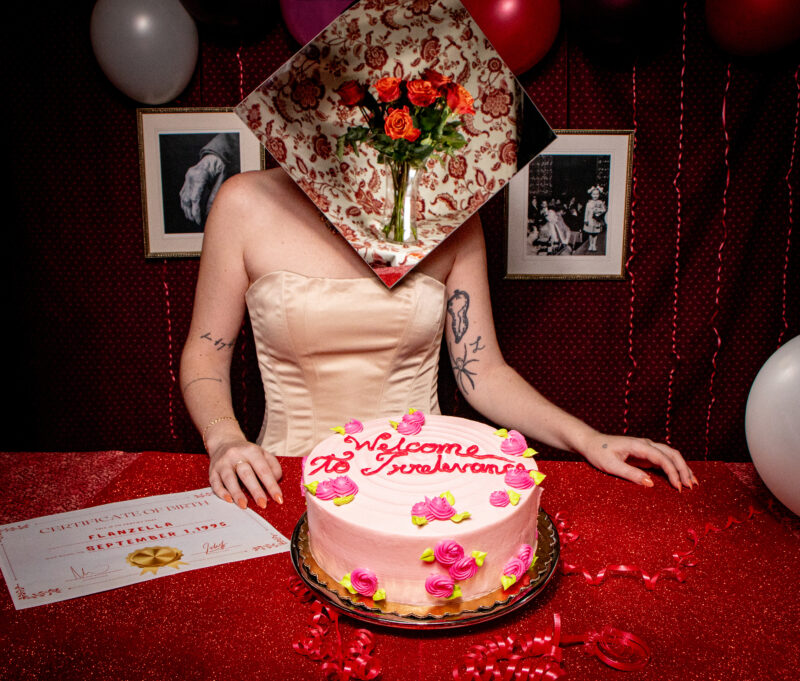
Recent scholarship by British academic Freya Gowrley proposed that collage is as much about the fragment as it is about the glue. Flanzella (Dallas, Texas, USA) sets the scene of her photographs with fragments like pictures in a frame and bouquets of flowers to tell a story about turning thirty. Guylaine Séguin (Montreal, Quebec, Canada) cuts out fragments from illustrations of future residential developments, photographs them, and then recomposes them. Taken on the streets of Montreal in 1991, Liberté by Jan Kather (Elmira Heights, New York, USA) is a photograph of collage naturally occurring in the urban wilderness.
Artists engaged in darkroom or other photography processes to make pictures. Demonstrating how collage can transcend time, Claire Hansen (Brooklyn, New York, USA) makes tintypes using a wet plate collodion process that incorporates images taken from inside contemporary video games. Antonina Baygusheva (Berlin, Germany) collages with photograms made from weeds and plants collected in urban spaces. Robert Schaefer (New Orleans, Louisiana, USA) uses a cyanotype process to bring his fragments together. Lance Rothstein (Clearwater, Florida, USA) collages litter and other found material onto Polaroids.
The exhibition will present examples of projects presented at Kolaj Fest New Orleans 2025. Gain of Function: New Mutations/Old Traditions/Collective Effervescence is a project led by Emily Denlinger (Cape Girardeau, Missouri, USA) that speaks to the role of art, ritual, and resilience. Building on her own work, Denlinger engaged with thirty-nine artists at the event to make locative collage photographs in an artist-created landscape inspired by global masking traditions. Also at the event, the Special Agent Collage Collective (Carnation, Washington, USA) sent attendees on a mission: Create a collage that is temporarily placed into the Kolaj Fest New Orleans environment in some way, whether that’s on the street, at a venue, or other place where someone may encounter it. The collective, founded by Andrea Lewicki in 2021, is an international collection of collage artists who complete special missions and share them on social media.
The exhibition will take place at Kolaj Institute Gallery from 10 December 2025 to 24 January 2026 as part of PhotoNOLA 2025, an annual celebration of photography in New Orleans, produced by the New Orleans Photo Alliance in partnership with museums, galleries, and alternative venues citywide. The exhibition is the fourth in a series in which Kolaj Institute is exploring the intersection of Photography & Collage.